

About · Will Yandell

I took the unconventional path.
That's why I built Trailhead.

Hi, I'm Will. Here's my story. At 18, I was on a path I hadn't chosen. I stumbled, unplanned, into one that aligned with my passion — and built 35 years inside major brands the 18-year-old version of me couldn't have imagined. The lessons stuck: how brands actually get built, and how the people inside them either find their path or don't. Trailhead is where both go to work — for owners, founders, and the next generation figuring out their own path.

Dad of two, lifelong outdoorsman, and a guy who's spent 35 years happiest at the start of a new trail — the unmarked kind, where you don't quite know yet what's around the bend. That's the instinct that shaped my career. And the inspiration behind Trailhead.

Will Yandell with Travis Pastrana inside a rally car at a Red Bull event
Red Bull rally event with Travis Pastrana, mid-2000s. Following the work that pulled me in.

For 35 years I followed the work that pulled me in — across action sports, energy, food, fitness, and more — instead of the path I was supposed to follow. It's how I built a career inside major global brands. It's also why I now believe what I half-suspected at 22: the prescribed path isn't the safe path. The safe path is the one that fits.

Trailhead is what happens when 35 years of that work gets pointed at the people who need it most: small operators who've outgrown DIY, founders with new ideas worth pressure-testing, and the next generation trying to figure out where they fit.

The unconventional path

I picked work that lit me up.
Not the path I was supposed to follow.

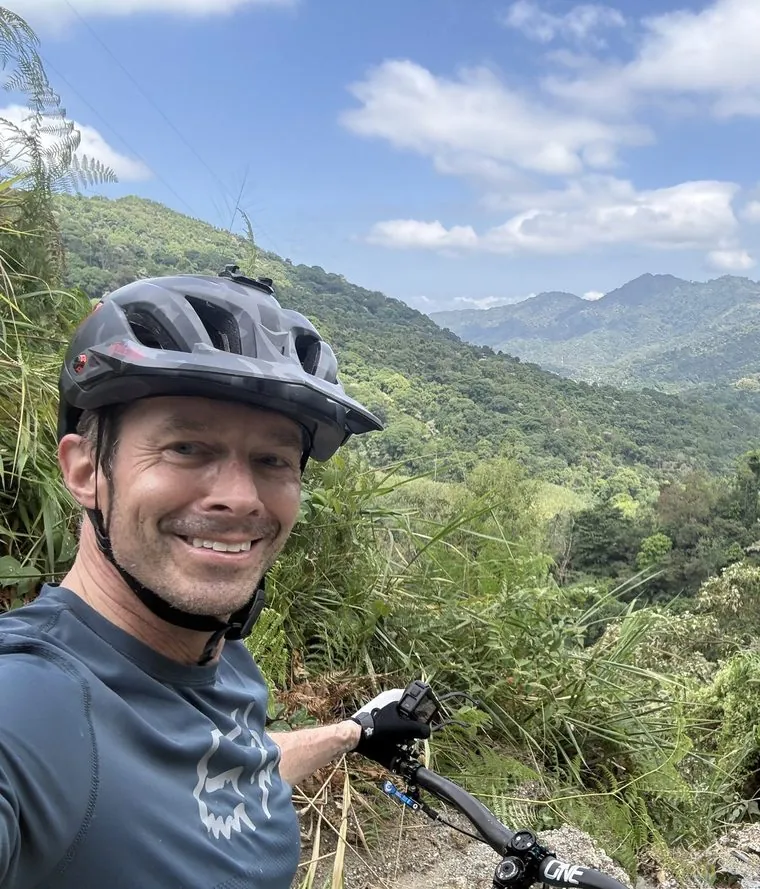
Will Yandell on a mountain bike trail

My extended family was full of attorneys. My parents were teachers. I was a product of all of them — well-intentioned, formative influences that gave me a lot to draw on later. What I didn't yet have at 22 was the habit of asking what I wanted based on who I actually was. So I spent all four years of college on the law school path. I never felt a real connection to it. I stayed on it anyway.

Before applying to law school, I worked two months in the family law firm. It confirmed what I'd felt for four years: I'd been on the wrong path all along. Luckily, my liberal arts education was something I could reframe for who I actually was.

The most sensible reframe of a $100K+ education? A part-time job in retail. My parents weren't thrilled. To be honest, I wasn't operating on conviction either — I was suddenly lost on the trail and grabbed at the closest thing I loved.

Snowboarding was a new sport — and I'd just fallen in love with it. So I walked into a ski shop and asked for a job. I wasn't trying to turn a passion into a career. I just wanted to be close to it. A couple months in, my natural networking instincts kicked in. I started meeting reps from the industry. Made the right connections. Landed at Airwalk. Only then — quietly, slowly — did the shape of the next 35 years start to come into view. And even then, not in any way I could have articulated.

Different industries, different problems, different cultures — but every step followed something real. Interest, energy, fit. Instead of someone else's idea of what I should be doing.

It worked. Not in a straight line. With detours and setbacks and the occasional what-the-hell-am-I-doing moment. But the throughline held: I picked work that aligned with who I was, and trusted the rest would come.

And it left room for the rest of life — my wife Leila, my sons, the rides, the things that don't show up on a résumé. Work that fits doesn't crowd out the life around it. It makes the life around it possible.

Trailhead exists because I now believe what I half-suspected at 22: the prescribed path isn't the safe path. The safe path is the one that fits. And most people aren't given the tools or the permission to figure out which path that is.

The work that built the toolkit

I've seen what works.
And just as much, what doesn't.

Following the work I loved put me inside some of the most recognizable brands in the world. Airwalk, where I started — the brand that defined action sports in the 90s, when skateboarding, snowboarding, and BMX were still counterculture, not categories. At its peak, Malcolm Gladwell named it one of the most influential brands in the world. Then Red Bull during the North American buildout — building the field marketing playbook for a category that didn't yet exist in this country. CLIF Bar, defining what an independent food brand could be at scale — and famously walking away from a nine-figure acquisition offer to stay independent. Equinox, building one of the few service brands premium enough to stay above the imitators. Most recently, vertical farming — bringing some of the most demanding produce in the country into top retail and restaurant accounts.

What I learned across all of them wasn't just what works. It's what doesn't. Every one of those companies made calls that looked smart at the time and turned out wrong. And every one of them made calls that looked risky and ended up defining the brand for a decade.

Pattern recognition isn't built from successes. It's built from watching enough of both at close range to know the difference before the rest of the room does.

What 35 years actually teaches you

And there's a meta-skill that emerges from doing this work for thirty-five years — one I didn't fully recognize until I started using it for something else. You learn to read markets. To evaluate industries. To understand the psychology of why people make the choices they make — at scale. That skill set was built for marketing. It turns out it works just as well for figuring out where a young person actually fits — what work they're built for, what industries are growing into their interests, what paths are quietly opening that nobody's talking about yet.

And one more lesson — not about the brands at all. The bigger the title and salary got, the clearer it became that neither was the thing. The work that lined up with my actual priorities — family, the life I was building, the rides — outperformed the work that didn't. Every time. That's the insight at the heart of First Tracks.

Two sons in real time

I'm not advising on a problem I read about.
I'm living it.

Will with his wife Leila and sons Luke and Sawyer

Luke and Sawyer. My sons. Luke is 23, less than a year out of college. His career hasn't really started yet. Sawyer is 19, in the middle of the part where every choice feels permanent. I'm helping them navigate the same questions I'm helping clients navigate — in a job market neither of us would recognize from when I started. What happened with Luke is what first showed me this work needed to exist.

Luke was the original test subject for the Trail Map. The reason it worked is that the framework took me out of the equation. I could be the dad asking real questions instead of the dad with all the answers. We sat at the kitchen table and worked through the assessment stack together. What came out of it wasn't a list of jobs. It was a clearer picture of what kind of work would make him miserable — and what kind would make him come alive. He'd been short on direction. The session lit a spark. Less than a year out of college, he's motivated to follow a path — a fundamentally different place than where he started.

Here's something the research keeps confirming: parents — even well-intentioned, well-credentialed, allegedly-experienced ones — are terrible at guiding their own kids' careers. We project. We default to safety. We confuse what worked for us in 1992 with what works in 2026. I'm not exempt. The framework exists partly because I needed it as much as they did.

Sawyer is at the spot where every adult around him has an opinion about what he should do next — including, naturally, me. That's exactly what makes the structured process useful: it pushes my opinion to the back of the line where it belongs. We're working through it the same way. Assessment. Honest conversation. Real research about a job market that's changing faster than any guidance counselor can keep up with.

Most career coaches are advising from a comfortable distance. Trailhead exists because the people doing this work should have skin in the game. And because nothing about the way I think about my sons' future is theoretical.

Why Trailhead exists

Big-brand thinking.
Where it actually helps.

I started Trailhead because there are two groups of people who can't get the strategic thinking they need, and both of them deserve it.

The two practices look like different services. They're connected by the same skill set: evaluating markets, reading where the world is going, understanding why people make the choices they make. The work looks different — a brand strategy for a small business owner, a Trail Map for a 22-year-old finding their path. The methodology underneath is the same.

Small business owners and founders can't afford a fractional CMO at $4–15K a month. A digital agency selling them ad spend isn't a substitute for actual strategy. What they need is a senior partner — someone who's done this for the biggest brands in the world — without the agency overhead.

Young people trying to figure out their path are leaning on systems that weren't built for this specific need. Guidance counselors do enormous work — but with caseloads of 400 students, deep career strategy isn't on the table. College career centers focus on a different part of the journey: resumes, applications, internships. The career coaching industry is built for middle-career professionals, not 17-year-olds. And nobody — nobody — is sitting down 1-on-1 with a young person and saying "here's what AI is doing to the path you're considering, and here's how to position around it."

Both of those gaps are fillable. Trailhead is what happens when somebody fills them.

The Trailhead Promise

Sound like the conversation you've been waiting to have?

Book a 15-minute call. We figure out which path makes sense for you — and if Trailhead isn't the right fit, I'll point you somewhere it is.

Book a Discovery Call